Welcome To Sri Lanka

Saturday, December 6, 2014

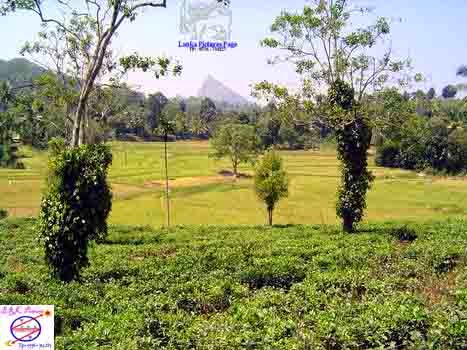
Adam's Peak in Sri Lanka

Visit Sri lankan It is  Beautiful  Country !!!!
Join This Page... Sri lankan Beautiful Pictures !
T:p :-  +94 0776 714 227

The Experience

                  Some places in the world are so mesmerizing and fascinating that they immediately ignite the imagination. Adam’s Peak in Sri Lanka is one such place that has been sparking the attention of the Sri Lankans and other international travellers for centuries. Adam’s Peak or Sri Pada is the fifth highest peak in the country, and has long been a pilgrimage site that draws thousands of pilgrims and travellers alike every year.

There are many legends associated with Adam’s Peak. One of these legends says that it is the very spot where Adam first set his foot on earth after being expelled from heaven. Buddhists believe that the impressions on the bare rock at the summit of the peak are the footprints (Sri Pada) of Lord Buddha. People believe that Buddha himself left his footprint on the rock in one of his visits to the mountain. According to the Hindus in Sri Lanka, these footprints are that of Lord Shiva. Then there are many who say the sacred footprints belong to St Thomas, the early apostle of India. Whatever the truth is, Sir Pada remains essentially a Buddhist pilgrimage site, and has been worshipped by the Sinhalese people of Sri Lanka for centuries.

For most of the visitors wishing to climb Adam’s Peak, it usually starts from Dalhousie, a small village located on the northern side of the peak. Ratanpura used to be the favorite spot to start the journey up Sri Pada’s summit. From Dalhousie, it is about a 7-km climb to the top of the peak, and it takes around 3–4 hours, on an average, to complete. Devotees start their journey in the nighttime so that they reach the top of Adam’s Peak for sunrise. There are countless steps (approximately 5,200), and you’ll need a torch to walk in the dark. On the way to the summit, you pass through an entrance arch, Friendship Dagoba, and many tea shops.

As you climb Adam’s Peak in Sri Lanka, you may find the place pretty cold and windy. Pilgrims reaching the top worship the holy footprints on the rock. However, the most spectacular sight to enjoy there is the “Shadow of the Peak” that is cast by the rising sun. The shadow is in the form of a triangle, and remains suspended in the mid air for about 15–20 minutes. Devotees believe this shadow is created by the mystical powers of the mountain.

There is a temple at the summit of Adam’s Peak which remains heavily crowded during the pilgrimage season (December to May) and especially in the months of January and February. Pilgrims offer prayers at the temple and then start moving down before it becomes too hot to walk outside.


.................................................................................................................................

Hi ! Everybody !!!!
Tell Your Friends Join this Web Site. Share this Pictures Ur friends.
Im Tour Organizer in Sri lanka.
So you like travel to Lanka? I can help you. 
We given to you Booking Hotel Rooms & Tour Transport
Please Visit my Facebook & website get more details.
T:p :-  +94 0776 714 227
Thanks!


Thursday, December 4, 2014

Kandy British Infrastructure

Visit Sri lankan It is  Beautiful  Country !!!!
Join This Page... Sri lankan Beautiful Pictures !
T:p :-  +94 0776 714 227

The British naturally introduced modern transportation systems.


The Kandy station platforms, still receiving a dozen trains daily.


The right-of-way has many signs warning pedestrians away, but they are universally disregarded.  The trains do move slowly.


The British built roads too, of course, and in a metric age, this British milestone survives on the Colombo-Kandy road.


A bridge from the 1820s.


The plaque recalls Governor Edward Barnes, who not only supported the development of coffee plantations but went into the business himself.  He seems to have been an inspirational leader, however: see, for example, the adulatory description of him in Fifty Years in Ceylon (1891), the autobiography of  Thomas Skinner, Ceylon's pioneer road builder.


The British bridged the Mahaweli Ganga in 1833 with a famous and elegant sandalwood-timber arch that was replaced in 1905 by an iron bridge.  For pedestrians in this densely populated area, they also built many suspension bridges for pedestrians.


Such improvements kept coming throughout the colonial period.


Recently, many have been retired and replaced or supplemented by vehicular bridges.


Kandyans took to the bus, as well as the train.  The irony of this sign--nearly obscured by leaves--is that buses abound in Sri Lanka today, but there is no such thing as a formal "halting place."  The buses stop on demand, anywhere and without warning.


A bit of a mystery: the Haloluwa Tunnel under Bahirawakanda, the ridge overlooking Kandy from the northwest.  Why was the tunnel built?  On either side, the ridge is covered with houses; those on the north side are a bit more accessible with the tunnel, but its cost seems disproportionate to that convenience.  The keystone carries the date 1954, which suggests that the tunnel was built in the early years of independence, as though planners expected urban growth.  All this, however, is very misleading: the tunnel was built between 1824 and 1831, when the tunnel formed part of the main road north from Kandy to Kurunegala.  Coffee-laden carts used it on the way from Kandy to the Mahaweli ferry, and for them the tunnel saved a couple of hours of travel time.  The tunnel became superfluous when a bridge was built across the Mahaweli at Katugastata in 1860: good thing, because the central section of the tunnel collapsed about 1870 and wasn't repaired until the 1950s.


.................................................................................................................................

Hi ! Everybody !!!!
Tell Your Friends Join this Web Site. Share this Pictures Ur friends.
Im Tour Organizer in Sri lanka.
So you like travel to Lanka? I can help you. 
We given to you Booking Hotel Rooms & Tour Transport
Please Visit my Facebook & website get more details.
T:p :-  +94 0776 714 227
Thanks!


Monday, December 1, 2014

Kadugannawa and Balana

Visit Sri lankan It is  Beautiful  Country !!!!
Join This Page... Sri lankan Beautiful Pictures !
T:p :-  +94 0776 714 227

        Kaduganawa and Balana are stations--one on the highway, one on the railroad--at the mountain wall separating the lowlands from the Kandyan Highlands.  


Here's the highway view at the top of the descent, although the camera has been artfully positioned to avoid the roadside.


A more honest picture would be like this.


The most striking feature of the road itself is this tunnel.  You're not looking at a switchback; instead you're looking at the original British road, with the tunnel, and a new road, which bypasses it.


The "tunnel" is so short that it begs the question: why didn't the British just blast it.  Answer: the tunnel was created to fulfill the Kandyan prophecy that their kingdom would never fall until the mountains were tunneled.  And so the British went out of their way to include a tunnel on the road--a fine example of civil engineering as a psychological weapon.


Another symbol, in this case commemorating Captain William Dawson, who designed the road.  He "had charge of the construction of the original road up the Pass, which for 40 years before the railway was completed was the only means of access to the mountain district from the north and west.  The road was constructed in 1822.  Prior to that time there were only two roads even in the Maritime Provinces...  As to the Central Province, it was altogether inaccessible to any but hill climbers."  Dawson died of dysentery a few years later, in 1829, while surveying the Mannar channel in the north of the island. "The poor fellow died in my arms.  The whole Island mourned him... Sir Edward Barnes had, notwithstanding Dawson's junior rank, selected him for the position of C.R.E.[Commanding Royal Engineer] which was a Colonel's command, for Sir Edward knew from his Peninsular experience of him the great merit Dawson possessed as an officer."  The monument was erected a few years later. (Quotation from Thomas Skinner, Fifty Years in Ceylon


The caption at its base.


Above the station: and a few miles to the north: paddy and tea, with detached peaks rising along the line of the mountain wall, which drops off to the west, on the left.


A wall at the small Balana Fort, which was less a fortress than a lookout point surveying the lowlands and the approaches to the highlands.


A country road snakes down to the railroad, mid-ascent here.


The railway groans uphill at Balana Station. There's a 1:45 grade here for 12 miles, as the track rises from 313 to 1698 feet.


Old signals.


Old signal controls, too, but immaculately kept.


Across the track, there's a tea stand.


.................................................................................................................................

Hi ! Everybody !!!!
Tell Your Friends Join this Web Site. Share this Pictures Ur friends.
Im Tour Organizer in Sri lanka.
So you like travel to Lanka? I can help you. 
We given to you Booking Hotel Rooms & Tour Transport
Please Visit my Facebook & website get more details.
T:p :-  +94 0776 714 227
Thanks!